Physical Address
304 North Cardinal St.
Dorchester Center, MA 02124
Physical Address
304 North Cardinal St.
Dorchester Center, MA 02124

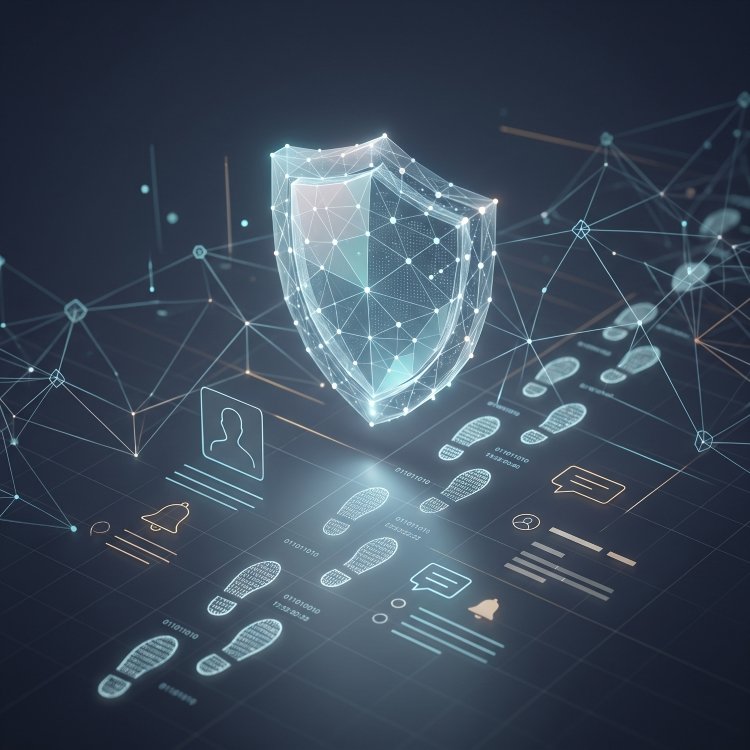
Every photo, tagged location, forum comment, and abandoned account can add another piece to your searchable digital footprint. In cybersecurity, understanding how public data is gathered makes it easier to reduce OSINT exposure before attackers exploit it. Collecting this publicly available intelligence is known as OSINT (Open-Source Intelligence). Attackers, corporate competitors, and scammers rarely need sophisticated tools to compromise a target. Instead, they assemble puzzle pieces you have already handed…

What is OSINT? Open-Source Intelligence (OSINT) is the structured process of legally collecting, analyzing, and interpreting publicly available data to gather intelligence. It relies entirely on free, open, and unclassified sources—such as social media, public records, search engines, and images—to evaluate security risks or conduct investigations. The term OSINT has exploded in popularity, yet many people still misunderstand what it actually means. Because modern life takes place online, every post,…

When analyzing availability in cybersecurity, it helps to realize that the strongest passwords and tightest encryption are completely useless if your systems are offline when you need them most. Imagine a major sales day where your online store crashes for hours, or a critical business morning where your team is completely locked out of their shared cloud drives. No data was stolen, and no files were altered, yet your business…

When exploring data integrity in cybersecurity, it helps to imagine checking your business bank account and seeing that a zero has been wiped off your balance. Or worse, imagine a customer shipping address changing in your system right before you send out a high-value order. In both cases, no data was stolen, and your systems stayed online. Yet, your business is facing a crisis. This is because your data lost…
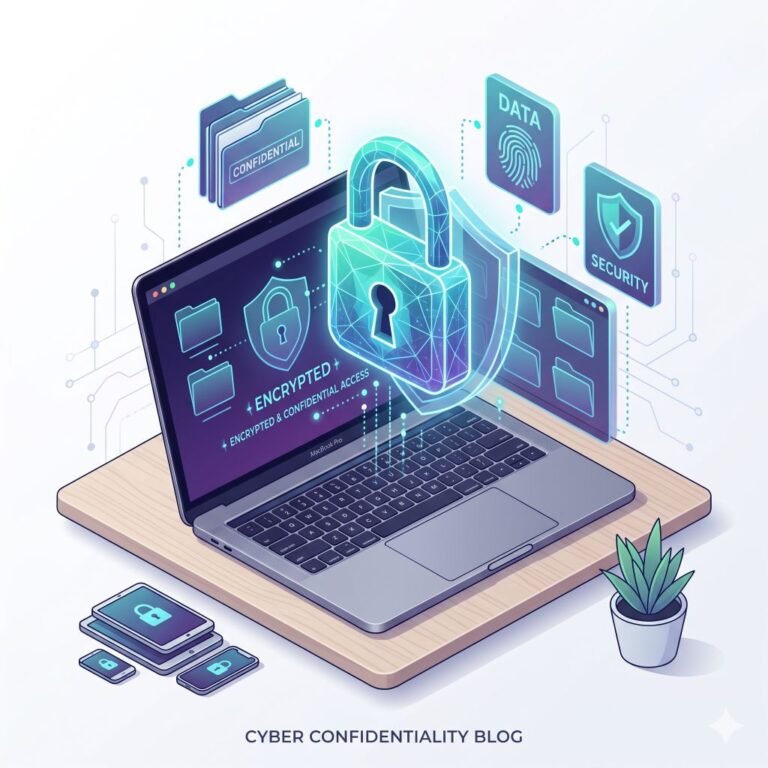
Keeping a secret used to be simple. You locked a paper document inside a steel filing cabinet and gave the key to a trusted manager. Today, managing confidentiality in cybersecurity is much more complex, as that filing cabinet has been replaced by cloud storage, collaborative spreadsheets, and remote communication tools. While these technologies speed up business growth, they also expand the area where data can be exposed. In digital security,…

Locking your front door keeps intruders out. Checking your bank statement ensures no one tampered with your balance. Opening your laptop and accessing your work files allows your business to function. If you want to understand how these actions connect to digital security, you first need to answer a fundamental question: what is CIA triad and why does it matter? Known collectively as the CIA triad, these three principles form…
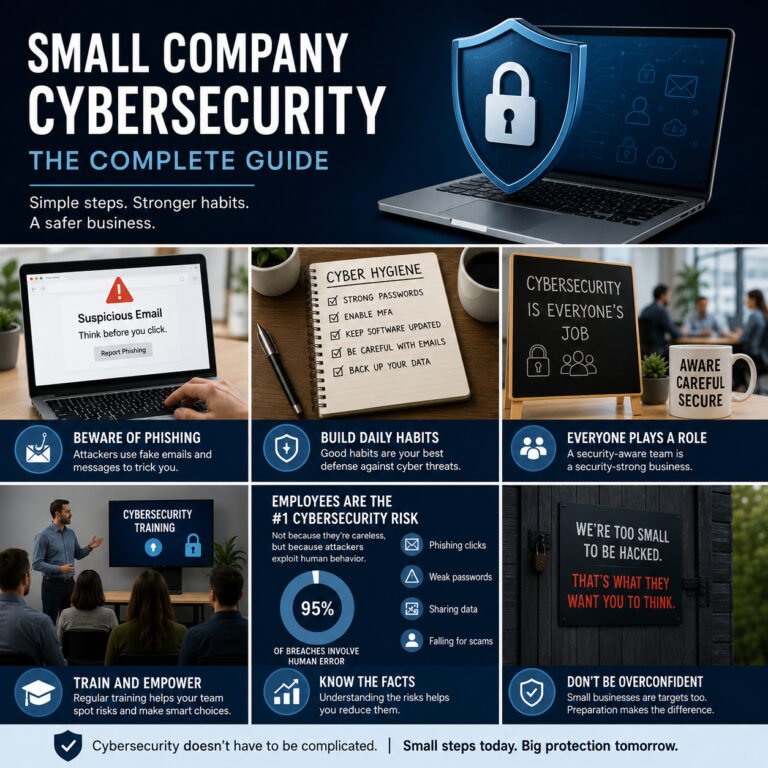
Small business cybersecurity is no longer optional for modern companies. Small business owners often imagine cyberattacks as something reserved for giant corporations, banks, or government agencies. It feels distant. Expensive. Technical. Like a problem for somebody else. That belief is exactly why so many small businesses become easy targets. Cybercriminals rarely care whether a company has 5 employees or 5,000. What matters is whether the target is vulnerable, unprepared, distracted,…
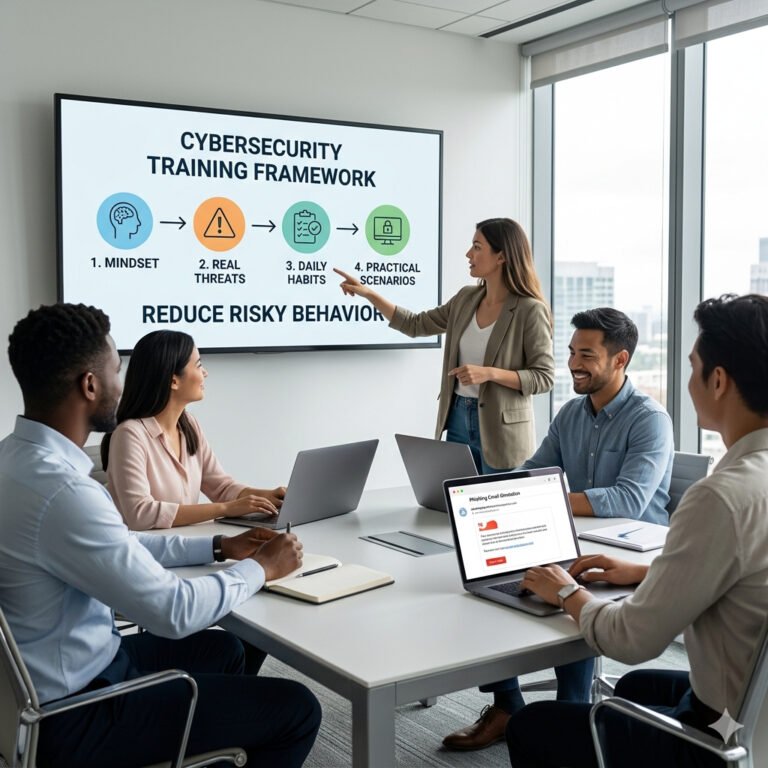
Why an Employee Cybersecurity Training Framework Matters Employee cybersecurity training framework is often missing in small businesses, even when companies understand the importance of training. Without a clear structure, training becomes inconsistent, difficult to remember, and disconnected from real work situations. As a result, training becomes: Employees listen, but they do not apply what they hear. However, effective training does not require complexity. It requires clarity. When training is structured…

Why Cybersecurity Training for Small Business Is Often Ignored Cybersecurity training for small business is often seen as unnecessary, even though it plays a critical role in broader small business cybersecurity. Many companies believe they are too small to be targeted or assume that employees already know what to do. However, real incidents show a different pattern. Most attacks succeed not because systems fail, but because employees make quick decisions…

Why Cyber Hygiene for Small Business Matters More Than You Think Cyber hygiene for small business is often overlooked because it feels simple and routine, even though it plays a major role in broader small business cybersecurity. Many companies focus on tools and systems, but ignore the daily habits that actually create or reduce risk because they still believe they are too small to become real targets. In reality, most…